History
Humble Beginnings
I started as a deckhand on a boat owned by a Caterpillar tractor dealer in the winter of 1981. Went to the University of Washington, rowed on the crew team, worked at a restaurant on the lake, and lived a great chapter.
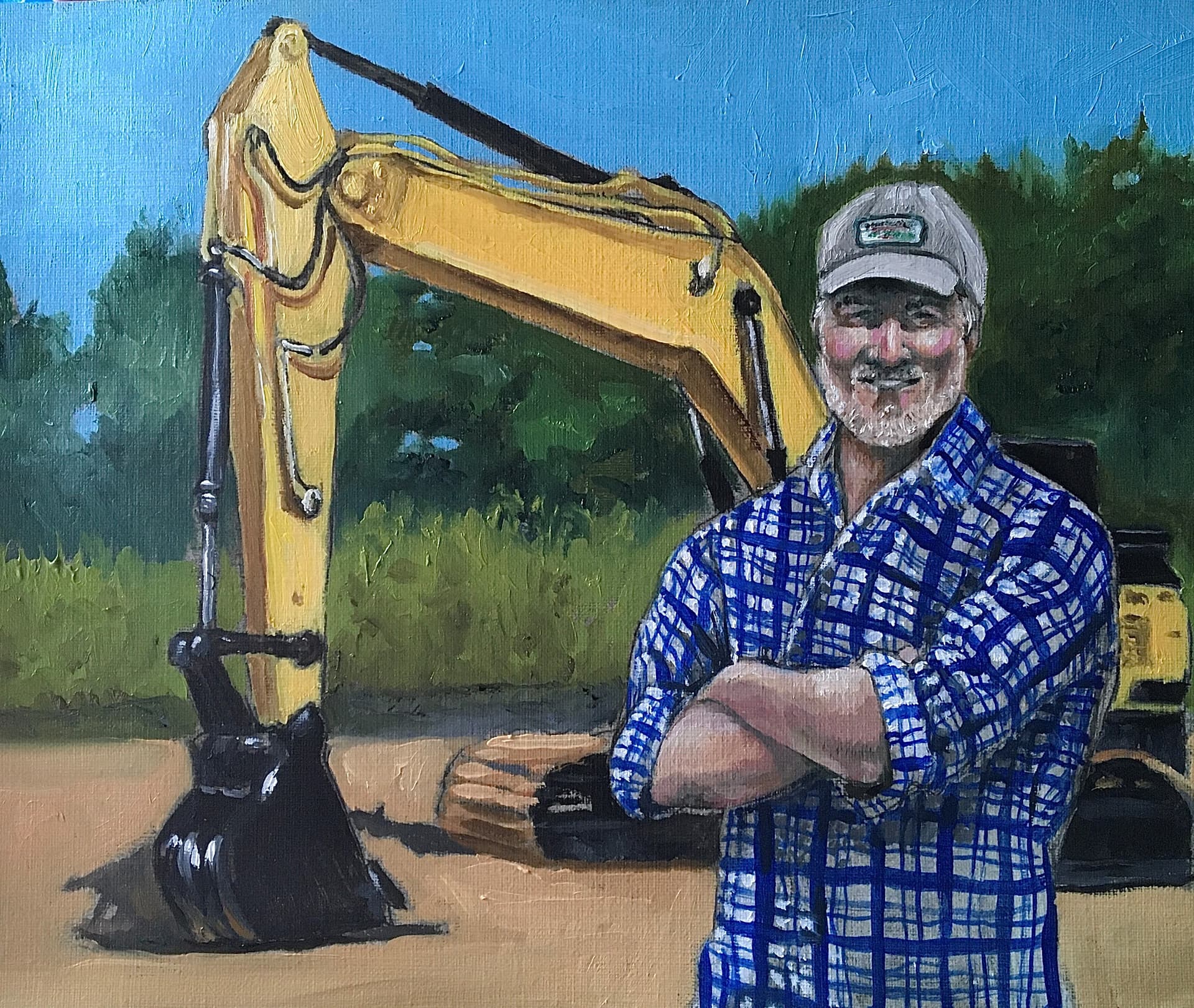
History
I started as a deckhand on a boat owned by a Caterpillar tractor dealer in the winter of 1981. Went to the University of Washington, rowed on the crew team, worked at a restaurant on the lake, and lived a great chapter.
Eight years later, I got hired out of college through a chance encounter with the owner — who had good memories of how I took care of customers, did my job, and followed through. My dad passed suddenly at the age of 51. Lesson learned: life is short, so get after it. I started out in the parts department with no promises.
Within eight years, I worked my way up to Vice President and General Manager, managing a dealership of 220+ people and $75 million in annual sales. We grew sales 48% during my last five years by installing the first-of-its-kind “marketing system” when the internet made a ton of sense to me — as opposed to doubling our sales force with people and expense. Killed all of our Yellow Pages subscriptions back in the day, if you know what those are anymore. Trimmed the fat and built a system of marketing and sales automation.
I had a vision of building a system before it was cool — drowning sales reps with leads until they cried uncle. I still believe in that at my core.
17 Years of Operations
During those 17 years, I held a variety of roles that shaped everything I do today:
Managed the machinery and power systems contracts, leases, and power systems projects. Learned how to manage receivables, contracts, and collect money — sometimes machines. My nickname was "REPO" back in the day for tracking down stolen equipment.
Lesson
Managing customer relationships through thick and thin. When selling tractors or serving any customer type, they depend on you day and night. So does your sales staff.
Back in the day, all you had to do was drop off donuts at the shop or in the field and take orders. CAT sold itself in many cases, so customer relationships were what you focused on.
Lesson
Show up, be consistent, follow up, and do what you say when you say you will. Customers are forgiving if you're honest.
Managed the field reps and big customers, making sure we hit our numbers with sales and product support initiatives. Took customers to lunch, the races, boat trips — and kept our reps managed and happy. Reinvented aftermarket sales direct to contractors.
Lesson
Customer relationships matter a lot in the equipment industry and are as important today as ever.
Trimmed my AS400 green-bar customer report from 408 contacts down to 150. Rebuilt the list to 300 aware, active, and interested customers. Sold to new, undiscovered customers just by looking for smoke and dust and showing up consistently.
Lesson
Clean databases accelerate any sales, marketing, or technology solution. Now with AI, database architecture matters more than ever.
Managed the earthmoving equipment rental division during a time of growth and public projects with a fleet optimization strategy to serve our customers. Increased sales and kept customers happy with a system based on availability, response, and call routing 24/7.
Lesson
Customer relationships matter a lot and still do. Uptime, support, creative ideas, and follow-through kept loyalty high and operating margins healthy.
Led our Rental Services startup division when CAT rolled out the Rental Services concept. Expanded territory with greenfield start-ups, acquisitions, and international expansion through strategic partnerships. Built and optimized new fleets for new customers.
Lesson
Competition with established rental companies was strong, with embedded loyalties. We had to be faster and better with next-level product support.
Managed the portfolio, contracts, leases, and plenty of high-maintenance customers personally. Monthly lunches, sometimes golf, and other activities kept most of the big decision-makers happy. Always kept an open line when cash or payment issues arose.
Lesson
There are people behind numbers, so you've got to get personal with the people paying the bills. Not every time — but sometimes.
I didn't have a marketing manager, which taught me the benefits of marketing from the ground up. We accomplished a lot with a little and were recognized by our OEM for best practices:
Main Lesson
Systems win — no matter the industry, no matter the customer, no matter the sales staff or sales process. Most systems are broken, disconnected, and wildly inconsistent. It doesn't have to be this way. Curiosity rewards success these days.
The Vision
Since its inception, EquipmentFX was built to learn and take a fresh look at every idea, every project — to imagine possible “what if” outcomes at that moment in time. 165 projects later, including some big ones that were built, operationalized, and in some cases sold to large enterprise customers or private investors.
Every project, every customer — they all had ideas and a vision but needed execution at every level. Today, AI is an enabler for those who choose to pursue efficiencies in new ways, stay curious about the possibilities, and gain new efficiencies where they're needed most. Always with an eye toward doing more with less: less time, less investment, fewer complications in adopting new things.
AI is not a magic pill or an “easy” button. It takes work to step out, think in clearheaded silence, describe the pain, define the solution and outcome, and manage the process.
The Name
When people ask me why the name, to me “FX” described something that had a bit of mystery and discovery about it. More to learn, more to know, places to explore, solutions to develop. It's that simple.
When it came to building out Agent X², it required the same approach: orchestrating and managing processes toward an outcome. And it reminds me of a key hire years ago — I called him “X Factor.” I'd say, “Hey X, can you make our website send leads to flip phones and notify the sales rep by zip code? And if they don't follow up in 30 minutes, have our internal sales guy call back?”
This was in 2001. Running a GoldMine 6.7 Enterprise Edition CRM connected to our website, sending out leads that even our OEM had trouble routing to out-of-territory reps. A good problem to have.
X would look at me with the “of course I can” smile, and we built systems that redefined how internet sales and processes could look and perform — with quantifiable new sales, customers, and profits. Agent X² is built this way: there is a human orchestration process that needs to happen before AI can do its best work.
Client History
I've focused on client solutions for over 20 years — not building a huge brand that disconnected me from a distributed, outsourced, low-cost model based on individual project needs. There were custom requirements on every project designed and delivered, with lessons to be learned and applied.
Since AI's very inception, it gave me the opportunity to sit back and reevaluate how business is done in general: bottlenecks, common weaknesses we all have, follow-through, scheduling, lead generation, and a host of other solutions that need to be managed at the operations level for every type, role, or task.
I developed the Executive Level Operating System (ELOS) to prove out concepts on my own inefficiencies with repetitive, multi-step tasks. The goal was never to eliminate employees, but to empower them to do more productive work and less of what they hate — and don't do anyway.
There's a real distinction between AI for AI's sake and connecting humans and empowering them, which is what the AI equipment effect solutions are all about.
Product Philosophy
Today, AI gives us a place of collective experimentation with low-cost, low-risk pilot projects that prove out concepts without disrupting your legacy systems. It's an ideal sandbox environment that lets you learn as you go, create the culture and team necessary to adopt at whatever pace you need. Every solution should start with discovery, curiosity, and big ideas about the future.
There are very few “plug and play” AI solutions that work right without human intervention and orchestration. AI product and engineering is a relatively new discipline, with changes to LLM and SLM models happening at least every week — and in some cases, days. It takes deep discovery, understanding what is broken, and knowing how to fix it from an operations level first before engineering can do its thing.
Our Approach
The EquipmentFX suite of products and services always starts with a human-centered approach. The equipment business is about relationships — always has been, and hopefully always will be. There's too much risk involved in letting AI and machines make decisions on machines that affect job sites and human lives.
Equipment inspections, application surveys, asset management, and gathering field and customer information to make sure customers get the right piece of equipment for the job — that's human work.
But there's a lot of automation in between before humans make the deal, close the deal, and filter out new prospects. We can deliver solutions faster to the customer than ever before. There are tons of mid-level processes that increase our ability to connect more deeply with more customers, filling the gaps in any customer-centric approach.
Our approach is to balance humans at the right point of connection — not replace the connections that matter most in the equipment industry.